Esomassage
0,00 €
| Language of origin | |
|---|---|
| Publication date | |
| Infos : | 182 pages |
| Rights representation |
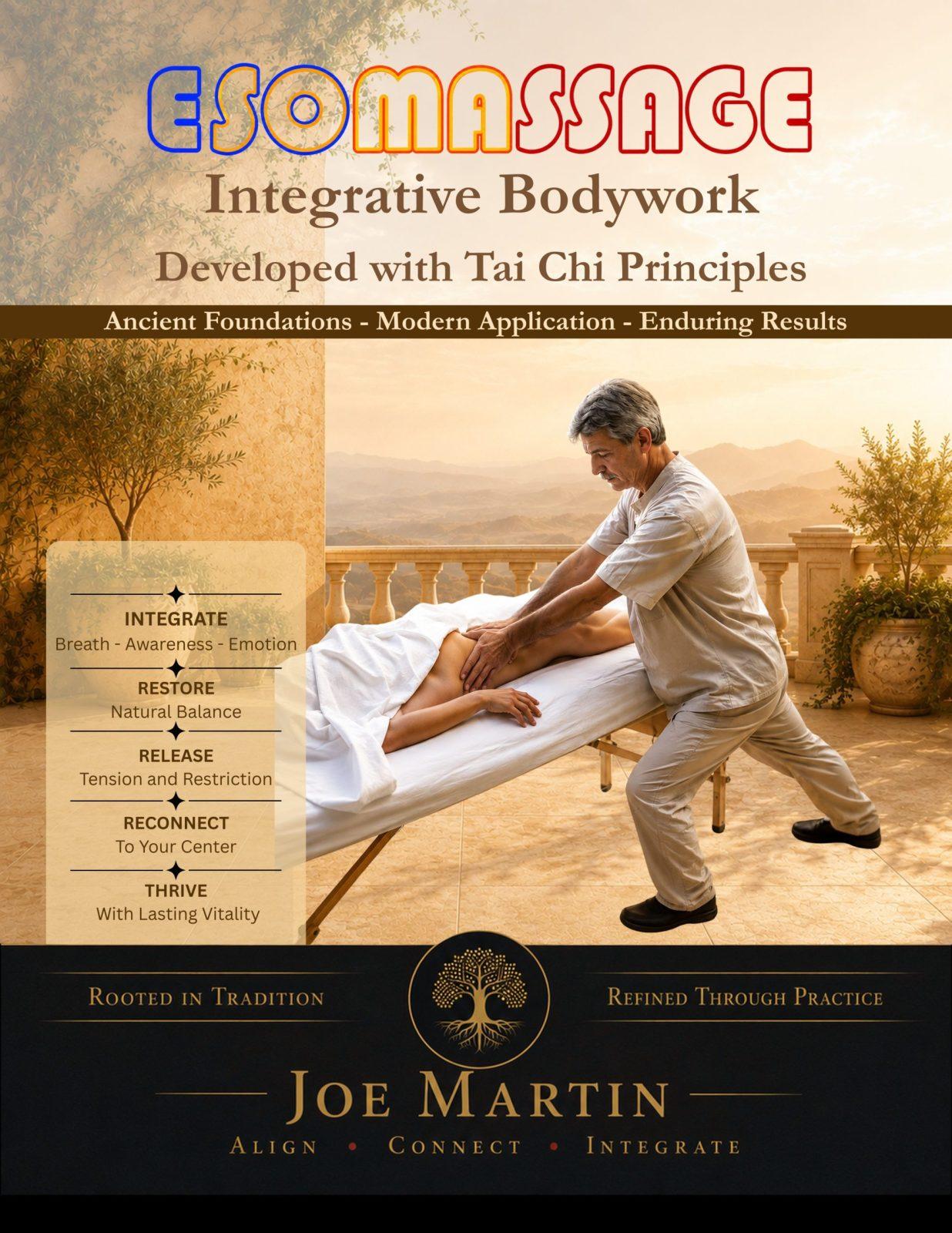
Integrative Bodywork Developed With Tai Chi Principles
Esomassage is a system of integrative bodywork that brings the internal principles of Tai Chi into the practice of therapeutic touch. The result is not simply a different collection of massage techniques. It is a different way of using the body to perform bodywork.
Tai Chi and massage may appear to be very different disciplines, yet both depend upon sensitivity, alignment, relaxation, movement, and the intelligent transmission of force. Esomassage brings these relationships together. Tai Chi principles are not added to massage as decoration or philosophy. They become practical tools for understanding how the practitioner stands, moves, transfers weight, applies pressure, senses resistance, and responds to the changing condition of the person beneath their hands.
The quality of bodywork depends not only upon what technique is applied, but upon the condition from which that technique is delivered. Esomassage develops the ability to generate pressure through alignment, weight transfer, rooting, relaxation, and coordinated whole-body movement rather than excessive local muscular effort. Effective bodywork should not require the practitioner to fight their own body.
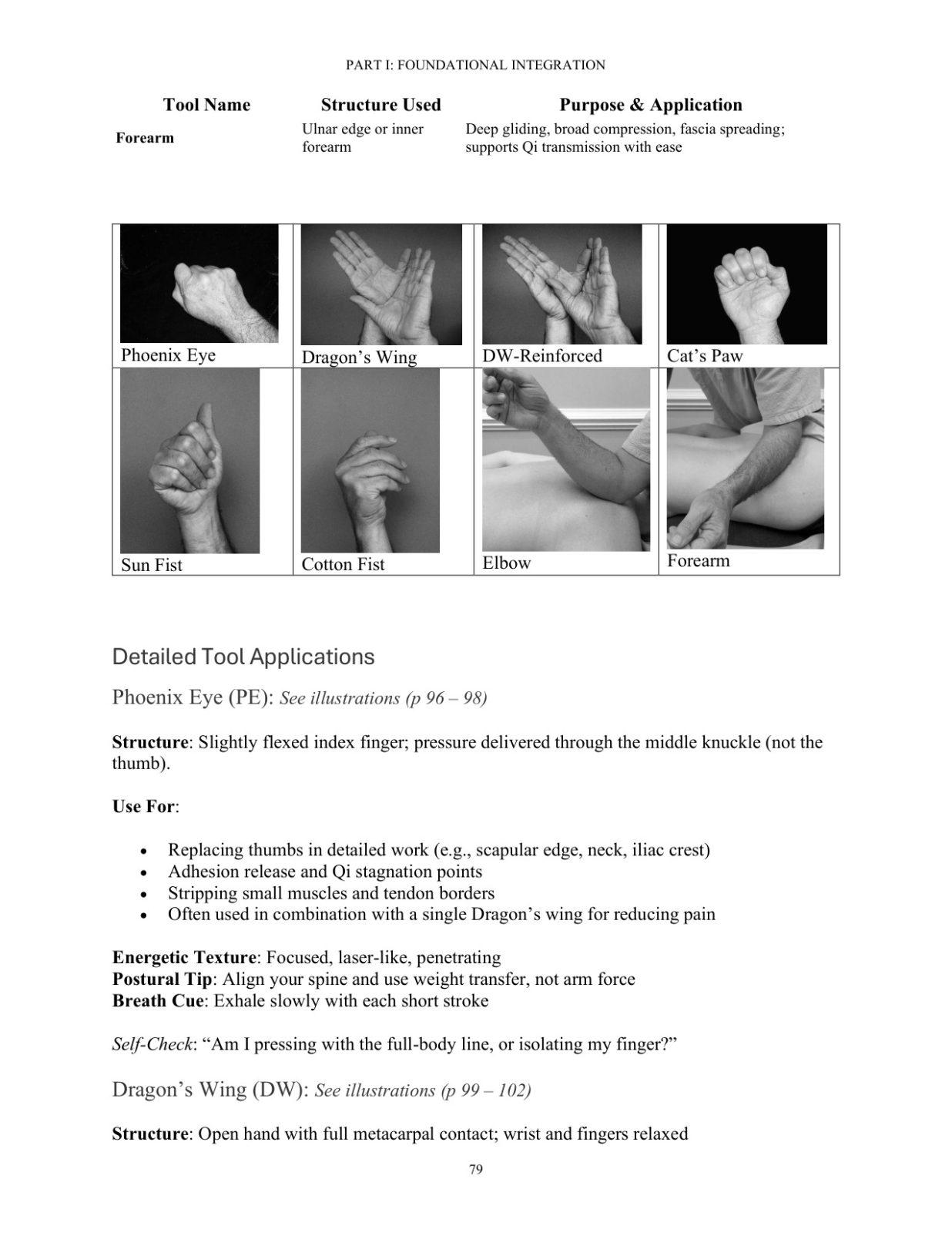
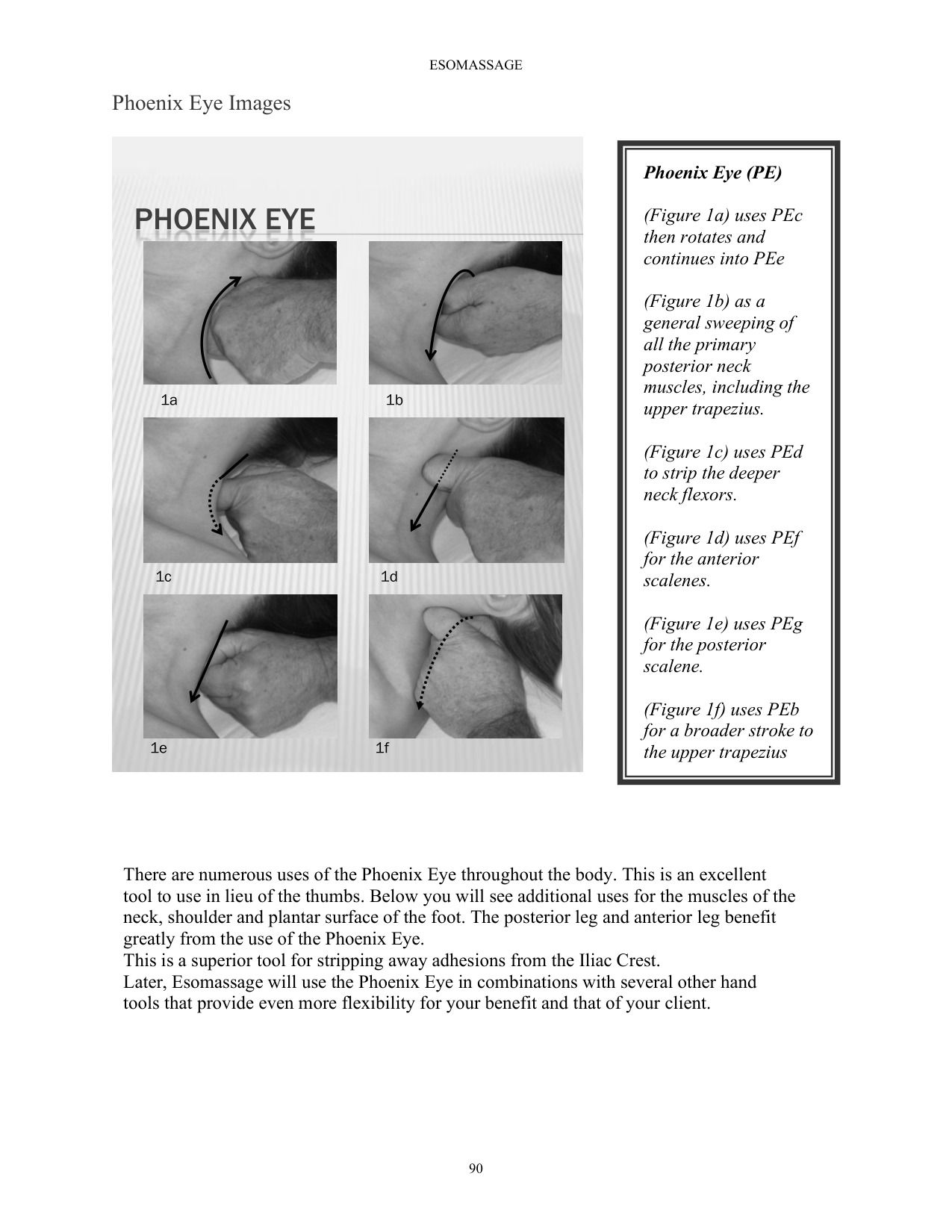
The book explores posture and alignment, rooting and grounding, relaxation and release, breath and movement, Yin and Yang, intent, whole-body coordination, Qigong concepts, perception of pressure, specialized hand tools, treatment strategies, energetic anatomy, and their application within hands-on bodywork.
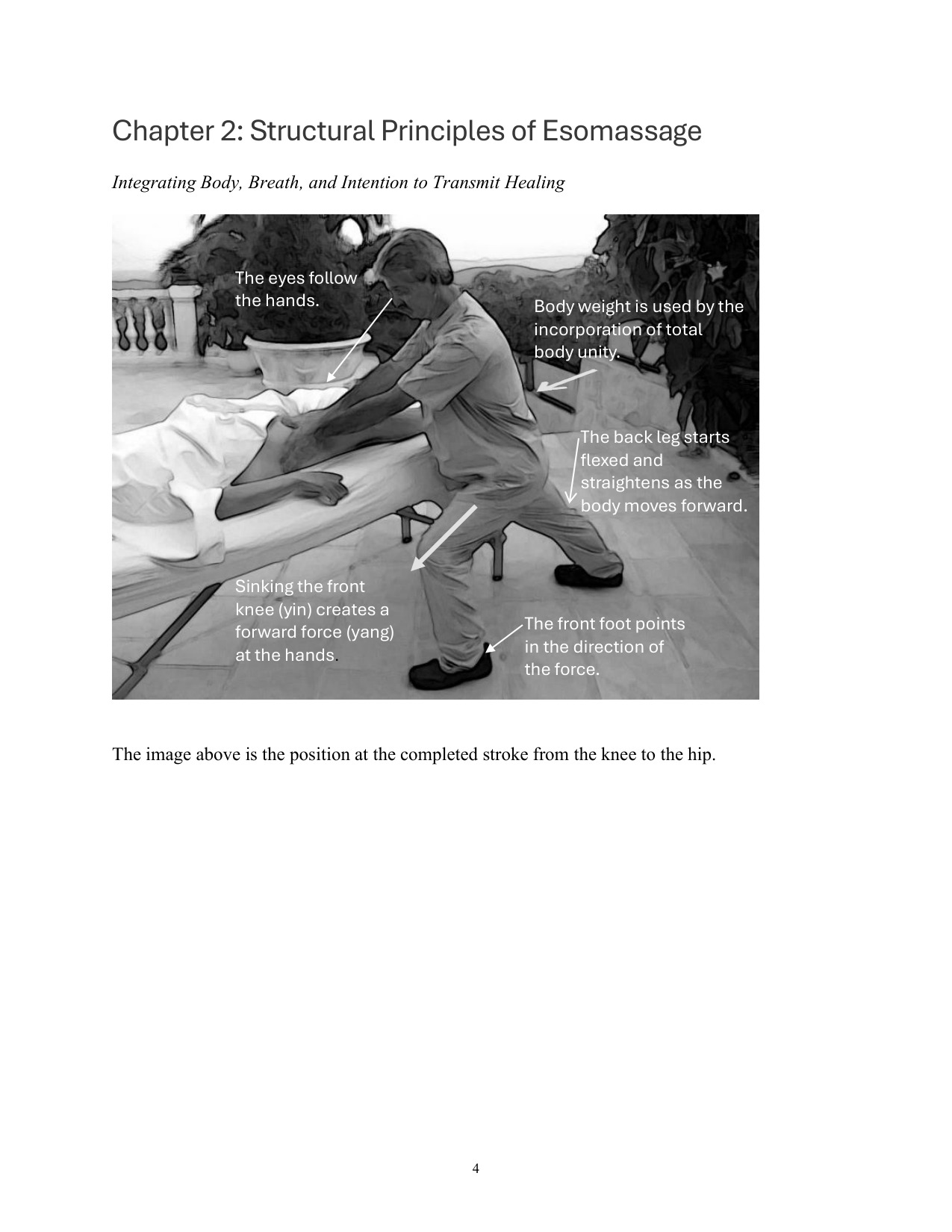
We do not move the arms. We move the body, and the arms follow. The hands remain the point of contact, but they do not need to become the primary engine of the work. When movement originates through the integrated body, the arms can transmit rather than manufacture force.
Esomassage teaches practical methods of bodywork within a larger system that includes specialized hand tools, treatment strategies, energetic anatomy, and a recommended treatment sequence. The objective is to develop a practitioner who understands how to organize the body, how to deliver force, how to perceive response, and how to adapt the work accordingly.
Related products