

Plant Whisperings
0,00 €
| Language of origin | |
|---|---|
| Publication date | |
| Infos : | 120 pages |
Indicator plants as the key to a healthy garden
A garden in a proper balance will ensure healthy plants and a rich harvest. But how do you attain this balance while identifying what the soil lacks? It all starts with a survey of the naturally occurring plants because, by definition, they’re never found in the wrong place. These indicator plants provide valuable information on the nature of the soil. By taking other factors into account such as soil structure and site conditions, deficits can be revealed and effective measures taken to remedy them. In this book, Jean‑Michel Groult describes the 60 most common indicator plants, what they tell us about the soil and microclimate, and which measures are genuinely helpful.
A garden in balance ensures strong plants and a fat harvest. But how do you achieve this balance and recognize what the ground is missing? It all starts with an inventory of naturally occurring plants. Because they are never wrong about their location. The so-called indicator plants provide you with valuable information about the nature of the soil. If you now consider other factors such as soil structure and site conditions, deficits can be identified and effective measures can be taken. In this book, Jean-Michel Groult describes the 60 most common indicator plants, what they say about soil and microclimate, and which measures really help.
THE GARDEN, THE UNKNOWN BEING
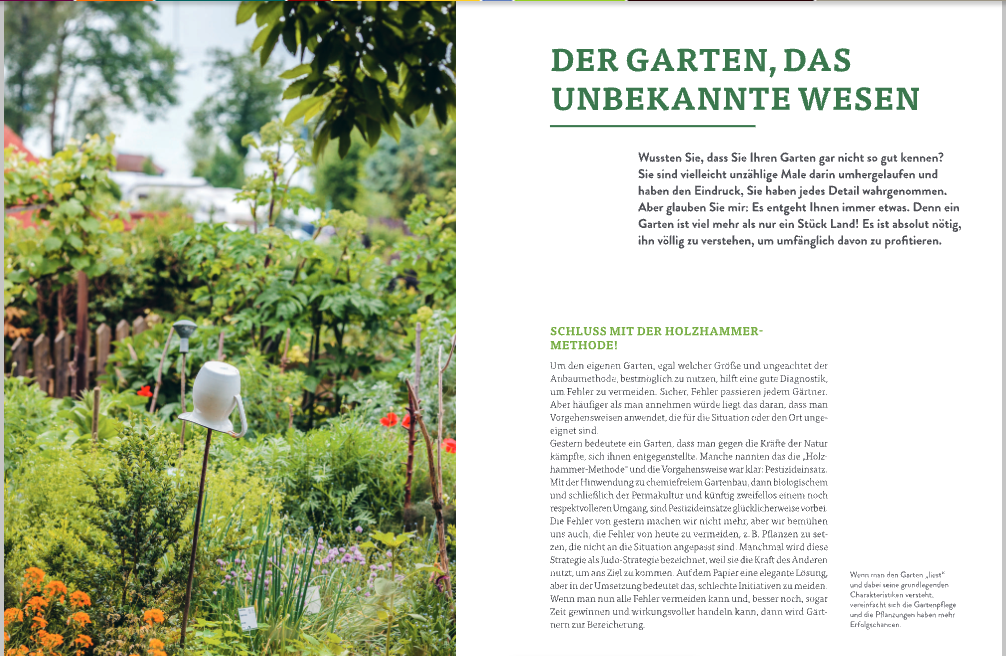
Did you know that you do not know your garden that well? You may have walked around it countless times and feel you have perceived every detail. But believe me: something always escapes you. Because a garden is much more than just a piece of land! It is absolutely necessary to fully understand it in order to fully benefit from it.
ENOUGH WITH THE SLEDGEHAMMER METHOD!
To make the best use of your own garden, whatever its size and regardless of previous methods, a good diagnosis helps to avoid mistakes. Of course, everyone makes mistakes. But more often than one would assume this is because one applies approaches that are unsuitable for the situation or the location.
INTRODUCTION
A REAL ECOSYSTEM
Current gardening practice uses the power of nature. This applies especially to permaculture, which takes a precise diagnosis as a starting point, but actually this applies to all approaches, whether permaculture or not. The right approach is simple: state your wishes, make a diagnosis of the garden and try to connect both in the most natural and simplest way. This does not always happen by itself and you should explore the surroundings before embarking on such a big undertaking. When you create a diagnosis of your own garden, you must not just take a quick look at it. The garden is an ecosystem and you only have to discover the happily not-too-secret clues. An ecosystem is a collection of living beings that interact in complex ways but form a whole. Exactly that also happens in the garden, even if the concerned ecosystem extends beyond the fence. It requires a little attention to decipher this ecosystem. You must observe, measure and think in order to understand it. Admittedly, it is a comprehensive activity. But an exciting one! Because a good diagnosis also means a nice lesson in biology and geology. Above all you will discover the presence of plants you did not know before, not to mention the fungi you will incidentally observe. If you decipher these clues, your soil will show you by itself how to enhance it and make it more alive and productive.
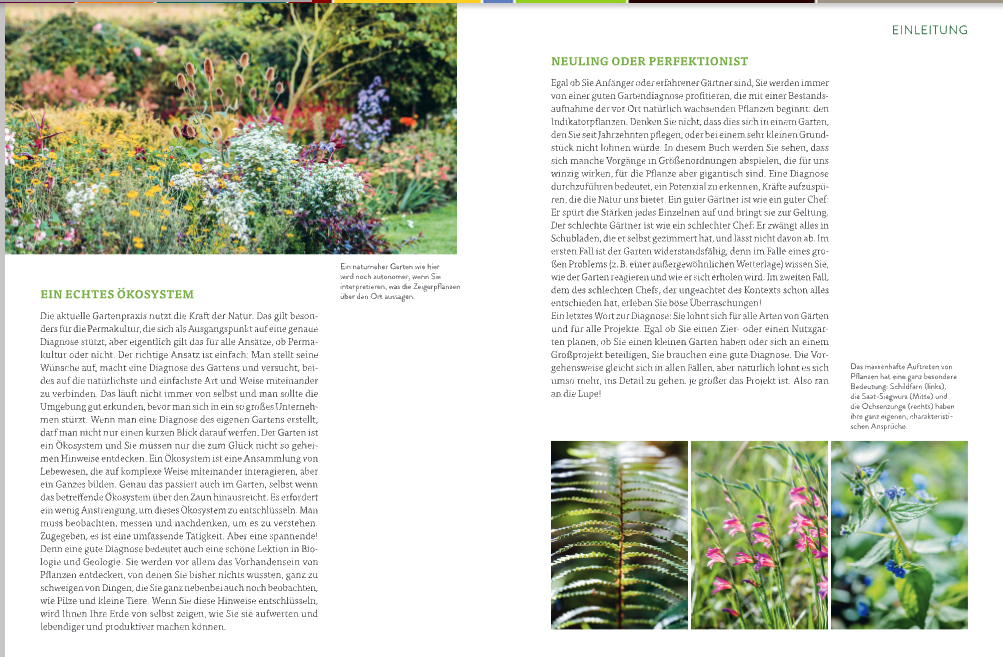
(Caption for large photo left) A near-natural garden like this one becomes even more autonomous if you maintain it less and settle more target plants according to the place.
NEWBIE OR PERFECTIONIST
Whether you are a beginner or an experienced gardener, you will always benefit from a good garden analysis, which begins with an inventory of the naturally growing plants on site. Do not think that this is not worthwhile for a garden you have cared for for decades, or for a very small plot. In this book you will see that some processes take place in the green area that seem small to us but are gigantic for the plants. Performing a diagnosis means recognizing a potential, tracking down forces that nature offers us. A good gardener is like a good boss. He senses the strengths of each individual and brings them out. The bad gardener is like a bad boss. He forces everything into templates he himself has made and allows none of it. In the one case the garden is resilient, in the other …
CHAPTER 1
STEPS TO DIAGNOSIS
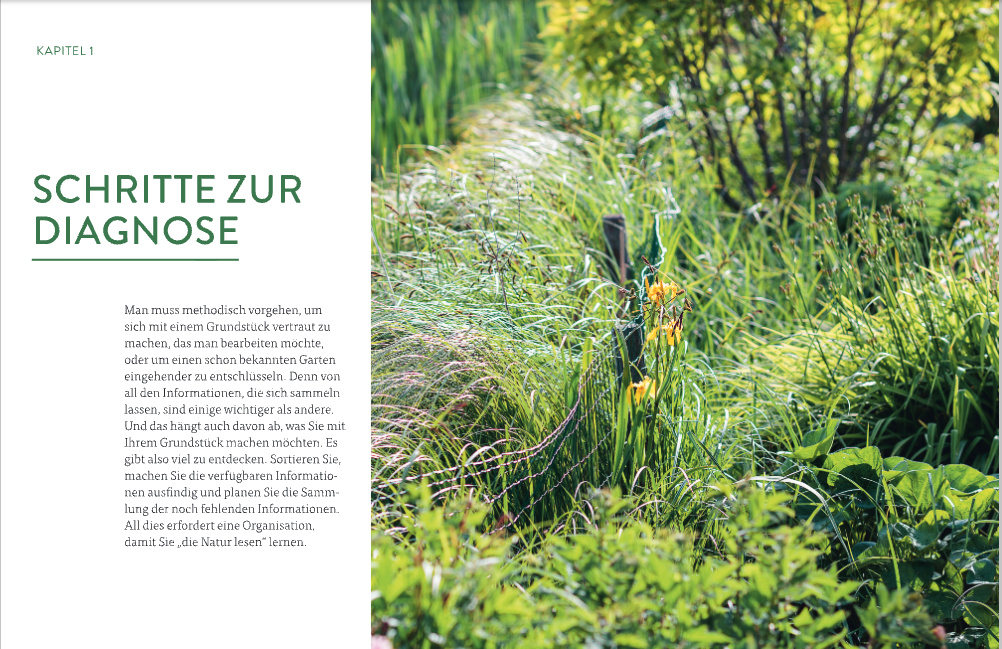
You must proceed methodically to become familiar with a plot you want to work on, or to decipher a garden you already know more deeply. Because of all the information that can be collected, some are more important than others. And that also depends on what you want to do with your plot. So there is much to discover. Sort, identify the available information and plan the collection of the still missing information. All this requires organization so that you learn to “read nature.”
Related products