Fascial Decoding
0,00 €
| Language of origin | |
|---|---|
| Publication date | |
| Infos : | 280 pages |
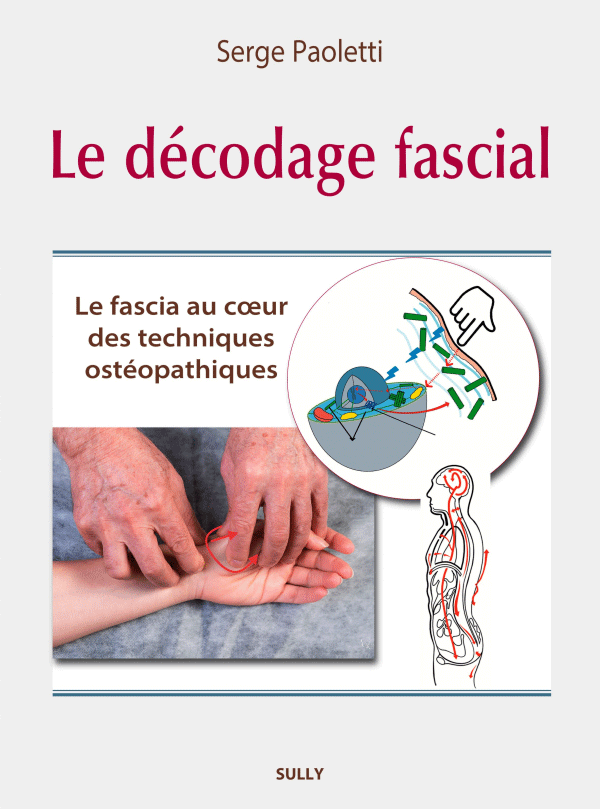
Fascia at the Heart of Osteopathic Techniques
The fascia connects all the structures of the body; it extends inside the cell to the nucleus thanks to microfilaments and microtubules and, through them, via mechanotransduction phenomena, it governs the organization of the cell. We originate from a single cell, possessing an hereditary memory, which will give rise to billions of cells. This means that each cell is capable of memory and that this memory is omnipresent, including at the peripheral level. The fascia is also a privileged support of memory and a vector of the psychosomatic and somatopsychic.
Important events in our life are memorized, notably by epigenetic phenomena that record them and, in some cases, transmit them to subsequent generations. A particularity of epigenetics is its reversibility, which opens up very interesting therapeutic possibilities, notably in the treatment of infants.
In certain circumstances, lesion-dating techniques may allow us to decode these memories.
Since the body is made up of about 70% water contained in the fascias, we must consider that the effect of our techniques induces changes in the distribution, or even the composition, of fluids. The fact that acupuncture meridians run through the fascia, and that plexuses, which can be assimilated to chakras, are also supported by the fascia, opens up new therapeutic perspectives.
Intention is a very interesting support in our techniques: it allows them to be improved and strengthened, corresponding to the fourth dimension of osteopathic treatment. This is confirmed by quantum medicine demonstrating that intention could possibly modify the state of matter, through biological and physiological effects, which are found in biofeedback or the placebo/nocebo effect. Finally, the body is indisputably the seat of electromagnetic phenomena that may be of interest in the treatment of certain dysfunctions.
Starting from the principle that fascias are omnipresent, osteopathic treatment will by fact include a fascial support. All techniques can be effective in treating the fascias provided they respect a certain chronology, notably in the choice of technique, which will be, as a first intention, tissue-based, tending if necessary towards structural, having previously passed through the intermediate stage of the sédaration technique.
Fascial Decoding explores these new areas and offers osteopaths and manual therapists a new reference work, both theoretical and practical.
Related products