
Leopold Stocker Verlag
Since 1995, Wolfgang Dvorak-Stocker has been running the family business in its third generation, employing more than 100 people, including over 80 at the Graz site.
The core competence of publishers is not trading in printed paper, but rather the preparation and provision of information. Online offerings on the Internet are becoming increasingly important. Landwirt.com is one of the most successful agricultural portals in Europe and offers not only editorial content, but also classified ads, a used machinery market, and a partner referral service. More than 110 million pages are viewed every month! According to official figures from Austrian web analytics, Landwirt.com regularly ranks among the top sites in Austria in terms of reach. The first LANDWIRT app has also been particularly successful, providing users with information about used machinery and other agricultural products available in their region, including animals such as horses and dogs. More than 150,000 users in all German-speaking areas downloaded this app in its first year! Due to this extraordinary success, Landwirt was the only Austrian company to receive the Criteo Award, a coveted prize in the internet industry, in Munich in April 2016.
LEOPOLD STOCKER VERLAG now publishes more than 60 new books per year, primarily guidebooks on topics such as cooking, gardening, and health, handicrafts and DIY, nature and hunting, as well as Austriaca and agricultural textbooks and schoolbooks.
If you click through the “publishing history in pictures,” you will see that Leopold Stocker Verlag used to have program areas such as children’s books, fiction, travel, and art books, which are no longer maintained today. On the other hand, the cookbook and hobby areas have gained greater importance.
Leopold Stocker Verlag not only publishes classic cookbooks, but also many “practical books” on activities that used to be summarized under the heading “home economics.” These include topics such as bread baking, cheese making and smoking, schnapps distilling, and even beer brewing or managing a small kitchen garden: all things that farming and rural households once did themselves. Nowadays, this knowledge is in greater demand again, less for reasons of economy and more for reasons of health and lifestyle. Those who want to avoid industrial products, chemical additives, and other questionable achievements of modernity will try to produce as much of their food as possible themselves. That is why the guidebook program of Leopold Stocker Verlag also includes books on homemade candies and homemade snacks.
When designing our practical book program, we place great importance on the expertise of our authors and the effective applicability of their recipes and instructions, because content is what counts! We therefore always try to recruit authors who are “true believers”—people who not only write about a topic, but also live it themselves. An outstanding example of this program is “Der Pischl,” the fundamental work on schnapps distilling, which has now sold more than 182,000 copies. Other books were the first to make a specific topic accessible to a wider audience and have therefore spawned a whole series of similar “follow-up books”: These “originals” include Gaigg, Ansatzschnäpse and Hlatky, Bierbrauen, each with more than 70,000 copies sold.
Stocker Verlag also devotes a wide range of books to the subject of kitchen gardens, including the series “Bio-Garten Praxis” (Organic Gardening in Practice), translated from French.
LANDWIRT is the leading agricultural trade journal not only in Austria, but also in southern Germany, with over 50,000 subscribers. The other magazines are aimed at specific target groups, such as Bienen aktuell, which has more than 25,000 subscribers and is also the newsletter of the Austrian and South Tyrolean Beekeepers’ Association, the trade journal Schafe & Ziegen aktuell (Sheep & Goats Today), and the magazine Landwirt Bio plus (Organic Farmer Plus), which is the only independent magazine for all organic farmers (and those who want to become organic farmers) in Germany and Austria and has a circulation of more than 10,000 copies just one year after its launch.
Showing 1–16 of 18 resultsSorted by latest
-
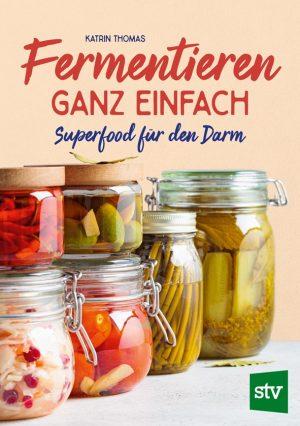
Simple Fermentation
0,00 € Order PDF -


Simple, Delicious, Preserved
0,00 € Order PDF -


The Art of Tattooing
0,00 € Order PDF -


The Pocket Vet
0,00 € Order PDF -
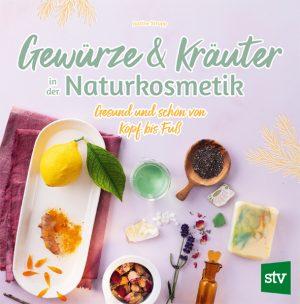

Spices & Herbs in Natural Cosmetics
0,00 € Order PDF -
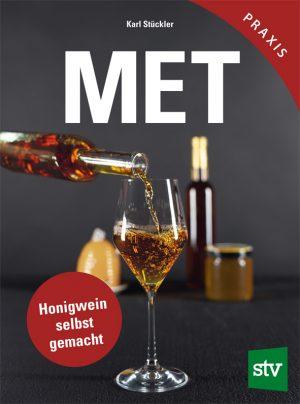
Mead
0,00 € Order PDF -
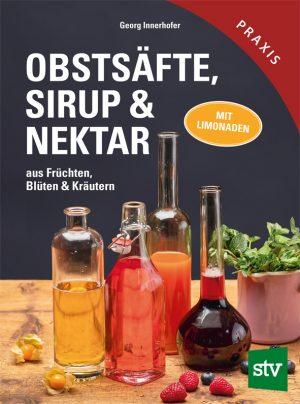
Fruits Juices Syrups & Nectars
0,00 € Order PDF -


Dry Stone Walls
0,00 € Order PDF -

Berry Fruit
0,00 € Order PDF -


Preserving Meat
0,00 € Order PDF -

Domestic Nuts & Seeds
0,00 € Order PDF -

Fascination of Mushroom Cultivation
0,00 € Order PDF -

Natural Cosmetics Using Herbs and Spices
0,00 € Order PDF -

Mead – Homemade Honey Wine
0,00 € Order PDF -


Chainsaw Carving – Very Easy
0,00 € Order PDF -

Dumplings – Homemade With and Without Meat
0,00 € Order PDF