
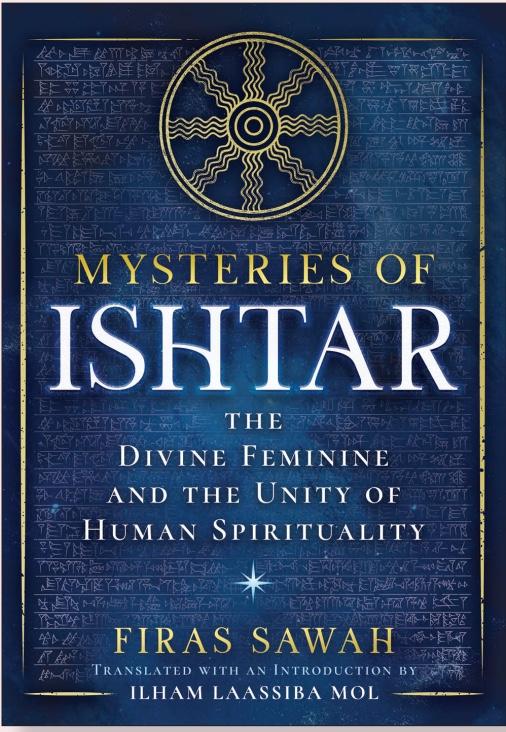
Mysteries of Ishtar
0,00 €
| Language of origin | |
|---|---|
| Publication date | |
| Infos : | Paper: 448 pages |
The Divine Feminine and the Unity of Human Spirituality.
- Details how the first form of organized religious consciousness emerged from reverence for the Great Mother in the ancient Near East
- Brings to life the many forms of Ishtar, examining her connections to the Moon, sacred animals and nature, healing, death, sexuality, and magic
- Analyzes myths and rituals centered on the divine feminine from several ancient cultures, including Mesopotamia, Egypt, and Greece.
Bringing us into the world of Ishtar, the goddess of fertility, love, war, and cosmic renewal, Syrian scholar Firas Sawah details how the first form of organized religious consciousness emerged from reverence for the Great Mother in ancient Mesopotamia. He traces the evolution of spiritual thought from the Paleolithic period, when humanity venerated female figures representing fertility and the cycles of nature, through the Neolithic era, when agriculture and settled life further solidified the worship of the Great Mother. Bringing to life the many forms of Ishtar, the author examines her connections to the Moon, sacred animals and nature, healing, death, sexuality, and magic. Showing how symbols and practices associated with the Great Mother had spread across cultures, he analyzes mythic narratives and rituals centered on sacred marriage and the descent into the underworld.
Exploring the divine feminine and masculine, Sawah shows how the Great Mother was complemented by her consort. The myths of Ishtar and Tammuz, Isis and Osiris, and Astarte and Adonis reveal a sacred partnership. As patriarchal systems emerged over time, male gods gained prominence; yet, the matriarchal roots endured, shaping the cultural traditions of the emergent patriarchy.
Available for the first time in English, this classic Arabic study comprehensively explores the Great Goddess’s influence on religion and civilization, revealing the ongoing relevance of the divine feminine and the unity of humanity’s spiritual heritage.
Related products


Firas Sawah
Firas Sawah is a Syrian researcher who has published 26 books in Arabic on mythology and religion. He has appeared in 20 television shows, including Legitimate Question, Alhurra TV, and Alghad TV. He is a professor of Arab Culture and the History of Religion at Beijing Foreign Studies University in China.